Things to Know Before Going on a Trek in Himachal
Planning a trek in Himachal? Discover 10 essential things to know before you hit the trail — from gear and permits to altitude safety. Guided by Paradise Yatra.
Paradise Yatra
Editorial Contributor
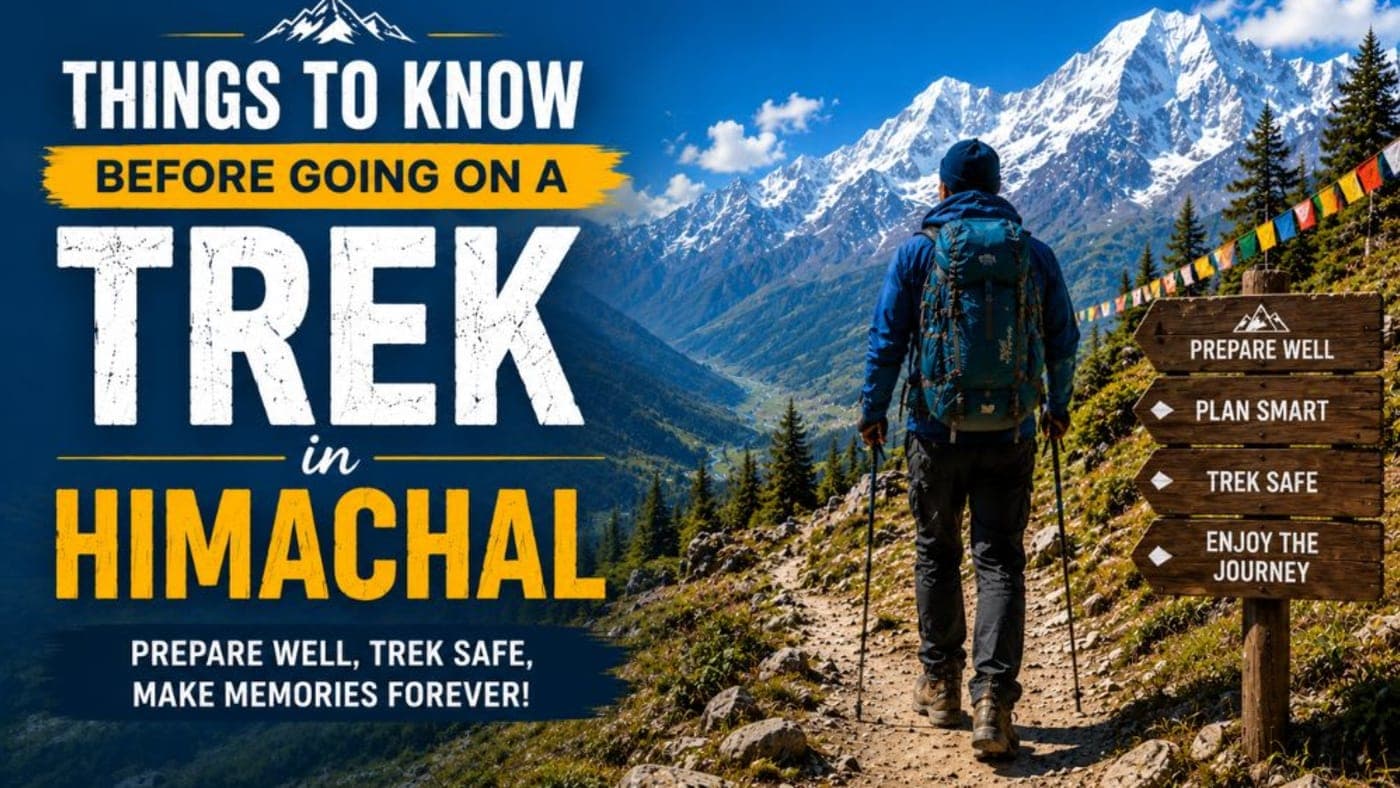
The snow-dusted ridgelines, pine-scented valleys, and ancient shepherd trails of Himachal Pradesh have drawn wanderers for centuries. Yet the mountains do not forgive the unprepared. Whether you are lacing up your boots for the very first time or returning after years away, there are essential things every trekker must know before heading into the high terrain of this spectacular Himalayan state.
At Paradise Yatra, we have guided countless adventurers through these trails, and we want you to arrive ready — not just excited.
1. Start at the Head of a Trail
Weather, and not enthusiasm, determines Himachal's trekking calendar. There are four different windows – spring (April – June), summer (July – August), autumn (September – November) and winter (December – March). These each are chosen for different trails.
July and August are actually ideal for those trekking high in Spiti and Lahaul which is rather dry, except for the outer Himalayas where they bring the monsoons. It's the season that everyone loves — then the sky is perfectly clear, the temperature is ok and the nature is like a field of yellow and gold. Spring, on the other hand, sees the rhododendrons bloom, while snow melts in the best conditions for the Kullu, Manali and Kasaur route.
Don't choose your trail by season; rather, use your season to choose your trail.
2. Be honest with yourself about your fitness level
A trek in Himachal is no ordinary stroll in the park. The biggest thing that changes with altitude is that your lungs have to work harder, your heart gets faster and recovery from exercise takes longer. Check to see if you are prepared to hike 6-8 hours in a daypack that is loaded on rough surfaces.
Ideally, start preparing at least 6-8 weeks prior to traveling. Maintain aerobic endurance foundation with Stairmaster, walking on hills and biking. Tighten knees, as it is in the descent that they bear the real load. It is always advisable for age above 50 and for people with any health issues with regards to the respiratory system, a medical check-up is suggested by Paradise Yatra.
3. Acclimatisation Is Non-Negotiable
A lot of trekkers are in a hurry and foot the high price. Acute Mountain Sickness (AMS) is a justified phenomenon that can happen to anyone, even those who are fit and healthy, at more than 2500 metres above sea level. The symptoms vary from headaches and nausea to, in extreme cases, fluid accumulation in the lungs and/or brain that can be fatal.
Ascent five feet and rest one foot = the golden rule. When travelling at higher altitudes in the Himalayan region such as on the Pin Bhaba Pass, Hampta Pass and Bhrigu Lake consider planning one or more rest days into your tour. Go to the first night at an intermediate altitude camp before ascending. Be sure to drink plenty of fluids the first couple of days, and stay away from alcohol.
4. Pack light, but with good equipment
Your armour against the mountains is the right gear. The following is a list of some basic things a trekking party will need while hiking in Himachal:
Well-worn (dressed in before the trail) Ankle Supporting Trekking Boots.
Layering system — thermal base, insulating mid-layer, waterproof outer shell
Wearing UV protection sunglasses and sun catching sun cream.
A pair of trekking poles (essential for avoiding possible knee injury during the downhill trekking portion of the hike)
A 0.5–0.6 m3 backpack equipped with rain cover.A raincovered backpack with capacity of 50-60 litre backpacks.
Trail Snacks - high energy type and water storage bottle with purification tablets.
No need for 3 pairs of jeans or full-size bottles of shampoo or a selfie ring light. Each additional kg will increase fatigue over sharp switchbacks. Pack Light Pack Smart.
5. Understand Permit Requirements
In Himachal Pradesh, there are a number of trekking zones in Protected Areas or near the international boundaries. Non-residents have to obtain Inner Line Permits (ILPs) for access to some tribal areas, Spiti Valley, and to Pin Valley National Park. Additionally, a number of trails have their own forest department permits.
While you are out on the trek with our fully guided package of Himachal Pradesh then permit paperwork is taken care of at Paradise Yatra, so you do not have to face any unwelcome surprises at the check point. If self-directed, conduct research on at least 3 wks before obtaining the permit.
6. Leave No Trace — The Mountains Deserve Your Respect
Trails of Himachal are under stress. Increased foot traffic will bring plastic garbage, disruptions of wildlife corridors, and eroded campsites. There's no such thing as being responsible when traveling on a trip... It's just being responsible.
Take out any waste you can't healthily dispose of. Utilize existing sites for camping. NEVER take wildflowers or disturb nesting birds. Keep non-noisy music away from water source locations where animals drink. Our guides from Paradise Yatre take carry-out trash bags with them and truly embody and live the "leave no trace" principles on each and every trek!
7. Make sure the guide or agency is properly trained and licensed.
The contrast between a transformative mountain experience and the dangerous one can be as simple as, who is leading you. A local guide who has knowledge of the weather patterns as events occur at micro levels and who is familiar with other approaches for descent in emergency situations and with the local spoken language with which he can communicate with communities on the mountain.
When choosing the firm to go with on your trip in the Himalayas to the picturesque state of Himachal, try to keep your eyes out for:
Wilderness First-aid trained guides
Clear and very no hidden fee clause on pricing.
Small group sizes to ensure that provision is tailored to needs.
An effective emergency evacuation plan
This all will be quite a contrasted belief of Paradise Yatra. Our guides are local to the mountains of Himachal, and have been there for decades.Our guides are local himachalites who have lived for decades on these paths — they've got the mountains in their bDNA!
8. Nutrition and Hydration on the Trail.
Your body is in a state of greater kinetics and will experience a weight loss at altitude that is greater than at sea level and it will dehydrate also quicker. Three meals a day are a must: Dal, rice and sabzi (local mountain food) are a carb source that the legs require for long days hiking. Remember, breakfast is the most important meal of the day, even if you are starting early.
Advise consumption of a minimum of 3 to 4 litres of water/trek day. Never wait until you are thirsty to drink enough fluids — thirst is a late symptom of being dehydrated at altitude. Any fluids including herbal, electrolyte and warm soups count.
9. Be Prepared to Travel Safely
High altitude trekking and emergency helicopter evacuation are not luxuries, but necessities when traveling to Nepal. In remote at the Himalayan terrain, medical emergency might result in lakhs of rupees without cover. Make sure your covering is specifically related to trekking above 4,000 metres.
Leave at home a detailed copy of your schedule including dates, campsites, emergency telephone numbers, etc. Sign in at each campsite as available (when network available).
10. Trust the Process, Embrace the Slow
Last but not least – take it slow. There is no benefit in speed, just as there is with presence, in the Himalayas. Path making is not a race to the top in the hill area but is rather a walk through the most breath-stratching area in the planet. Some mornings will be challenging, legs will be tired, and there will be times when climbing will feel like taking a giant step.
If you're in those moments then push through them. What lies beyond is worth every step – sunrise over Deo Tibba, a silent high altitude lake that shimmers in the cold clear sky of the Spiti Region.
The treats offered by Paradise Yatra are fully guided and curated Treks in Himachal Pradesh from the easy Kullu Valley to the challenging Lahaul and Spiti. We feel the mountains need to be enjoyed by all and our mission is to ensure that your first step onto the trail is the safest one.
Ready to explore?
Call Paradise Yatra and we'll lead you to the hills home.Share
Got Questions? We Have Answers.
Find everything you need to know about our seamless booking process, package details, and unforgettable travel experiences.

24/7 Support
Always here to help