Things to Do in Jaipur: Best Activities & 2-Day Itinerary
Planning a trip to Jaipur? Discover the best things to do in the Pink City, from exploring historic forts and royal palaces to shopping in colourful markets and enjoying authentic Rajasthani food. This guide covers top attractions, a practical 2-day itinerary, travel tips and budgeting advice to help you plan your visit.
Paradise Yatra
Editorial Contributor
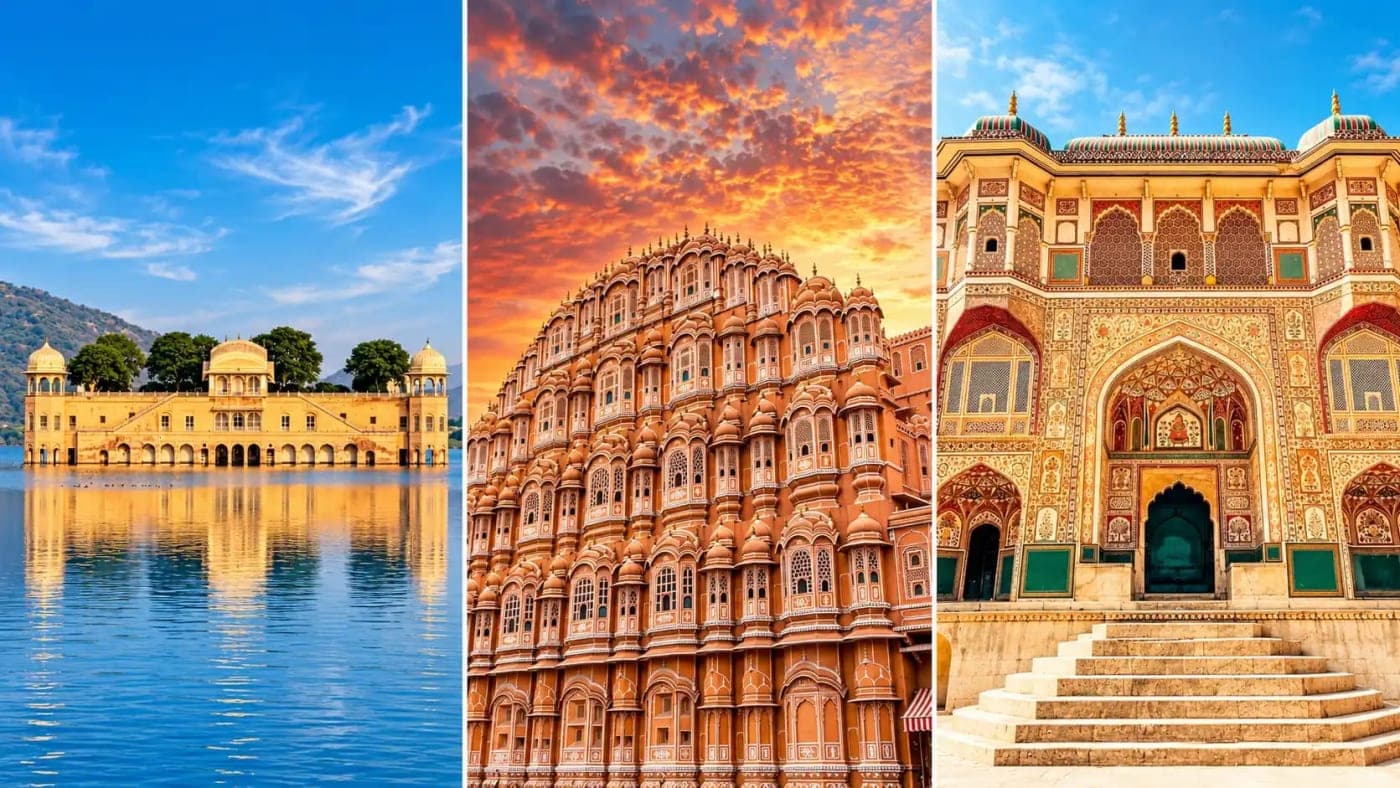
Jaipur may appear compact on a map, but the experience on the ground is quite different. The main attractions are grouped into three areas: the forts near Amer, the historic walled city, and the viewpoints along the ridge above. Travellers often lose time moving back and forth between these clusters. To help make the most of your visit, this guide organizes Jaipur’s highlights by area and suggests a two-day plan that reduces unnecessary travel.
Ticket fees and timings below were checked in October 2026. Rajasthan revised rates at its state-run monuments from 1 January 2026, and sources still disagree on a few figures, so confirm at the gate or on the official site before you go. If you just want a quick list of attractions, our guide to places to visit in Jaipur covers that. This one is for planning the trip itself.
Why Jaipur Suits a Short Trip
Jaipur is located about 280 to 300 kilometers from Delhi. The journey by road typically takes five to six hours, while trains can cover the distance in about four to five hours, depending on the service. This accessibility makes Jaipur a popular weekend destination for people from Delhi, Gurugram, and Noida. The city’s forts, palaces, observatory, and lively bazaars are all within easy reach of each other, and the local cuisine is reason enough to plan several meals during your stay.
Visitors often find Jaipur tiring because of the heat during the warmer months, the uphill walks required at the forts, and the need to purchase separate tickets at many sites. With some planning, however, each of these challenges becomes much more manageable.
Best Things to Do in Jaipur
Jaipur, the Pink City of India, is known for its magnificent forts, royal palaces, colourful markets, and rich cultural heritage. From exploring historic landmarks and admiring traditional Rajasthani architecture to shopping for handicrafts and tasting authentic local cuisine, the city offers something for every traveller. The following sections group the main sights by area, making it easier to plan your itinerary, save travel time, and explore nearby attractions together. Whether you are visiting Jaipur for a day or planning a longer stay, these highlights will help you experience the city's history, culture, and vibrant atmosphere at your own pace.
Amber Fort
Amber (Amer) Fort is the one sight most visitors won't skip, and it rewards an early start. It opens around 8 am, and the courtyards are noticeably calmer in the first hour than by late morning. Raja Man Singh began building it in 1592, and later rulers kept adding to it for roughly a century. It overlooks Maota Lake from the hillside.
The Sheesh Mahal, where mirror work covers the walls and ceiling, is the room people queue for. Give the rest of the complex time too: the Ganesh Pol gateway, the courtyards, and the upper ramparts, which look back over the lake and the valley.

Time to allow: two to three hours
Timings: about 8 am to 5:30 pm, with last entry around 5 pm (confirm on the day)
Fee: reported at ₹200 for Indian adults since January 2026, up from ₹100
The fort also has an evening light and sound show, covered in the night section below.
Jaigarh Fort
Jaigarh Fort stands on the ridge above Amber and is sometimes overlooked by visitors. Unlike Amber, it is primarily a fortress, with imposing walls, old ammunition stores, and the Jaivana cannon, which is often described as the largest cannon on wheels. From here, you can see across the Amer valley and, on clear days, all the way to Nahargarh.
The two forts are connected, but the route for visitors has changed at times, so it is best to ask at the ticket counter about the current access and whether Jaigarh requires a separate ticket. Plan to spend about one and a half to two hours here. Jaigarh is especially interesting for those who appreciate military architecture, but if you find that forts tend to blend together, visiting just one may be sufficient.
Panna Meena ka Kund
A short walk from Amber brings you to this stepwell, a square structure with geometric staircases leading down to a water tank. It is among the better-preserved stepwells near Jaipur. There is no entry fee, and a visit usually takes about 15 to 20 minutes.

It is important to check the current rules before visiting, as recent reports suggest that visitors are often only allowed to view the stepwell from the edge, with guards ensuring that no one walks down the steps. Some people may offer to act as guides for a fee, which you can decline if you prefer. Since the timings are not always consistent, it is best to include this as a brief stop during your Amber visit rather than as a main destination. If you are interested in traditional crafts, the Anokhi Museum of Hand Printing is nearby, but it is said to be closed on Mondays, so confirm its hours before
planning your visit.
Jal Mahal
Jal Mahal cannot be entered by visitors, as it stands in the middle of Man Sagar Lake. The best way to see it is from the lakeside promenade along the Amer road. It makes for a convenient 20 to 30 minute stop on your way back from Amber, and the view is especially attractive at dusk when the building is illuminated.
Hawa Mahal and the Old City
Hawa Mahal's pink sandstone front has 953 small windows, built so that royal women could watch street life without being seen. There are two ways to see it. From the road, you get the facade everyone photographs, and several cafes on the opposite side offer rooftop views. From inside, you look out through the lattice at the street below, so the view is the reverse of the postcard.

Entry to the interior is reported as roughly 9 am to 4:30 pm, and a visit takes 45 to 60 minutes. The facade is visible all day and lit at night. The Badi Chaupar metro station is a short walk away.
The lanes surrounding the old city are well worth exploring without a fixed plan. Shops, snack stalls, and temples are located close together, making the area easy to walk and discover at your own pace.
City Palace
City Palace is privately managed by the former royal family, not by the state archaeology department, so its ticketing works differently and isn't covered by the state fee revision. Part of the complex is still a residence. The rest is a museum: the Mubarak Mahal textile gallery, an armoury, art and manuscripts, and large courtyards with decorated gateways.

Ticket tiers matter here. A general ticket covers the main museum areas, while the upper floors of Chandra Mahal need a higher-priced ticket. Published prices vary a lot between sources, so check the palace's official website before you go instead of relying on a blog figure. Some listings mention a separate evening entry, and one source says the palace closes on a Holi day. Allow two to three hours, and go in the morning.
Jantar Mantar
Right beside City Palace, Jantar Mantar is the astronomical observatory built by Sawai Jai Singh II in the early eighteenth century, and it's a UNESCO World Heritage Site. The instruments look like abstract sculpture, but each one measures something: time, the position of the sun, the movement of the stars. The Samrat Yantra sundial is the large one (the commonly quoted height is around 27 metres) and is said to read time to within a couple of seconds.
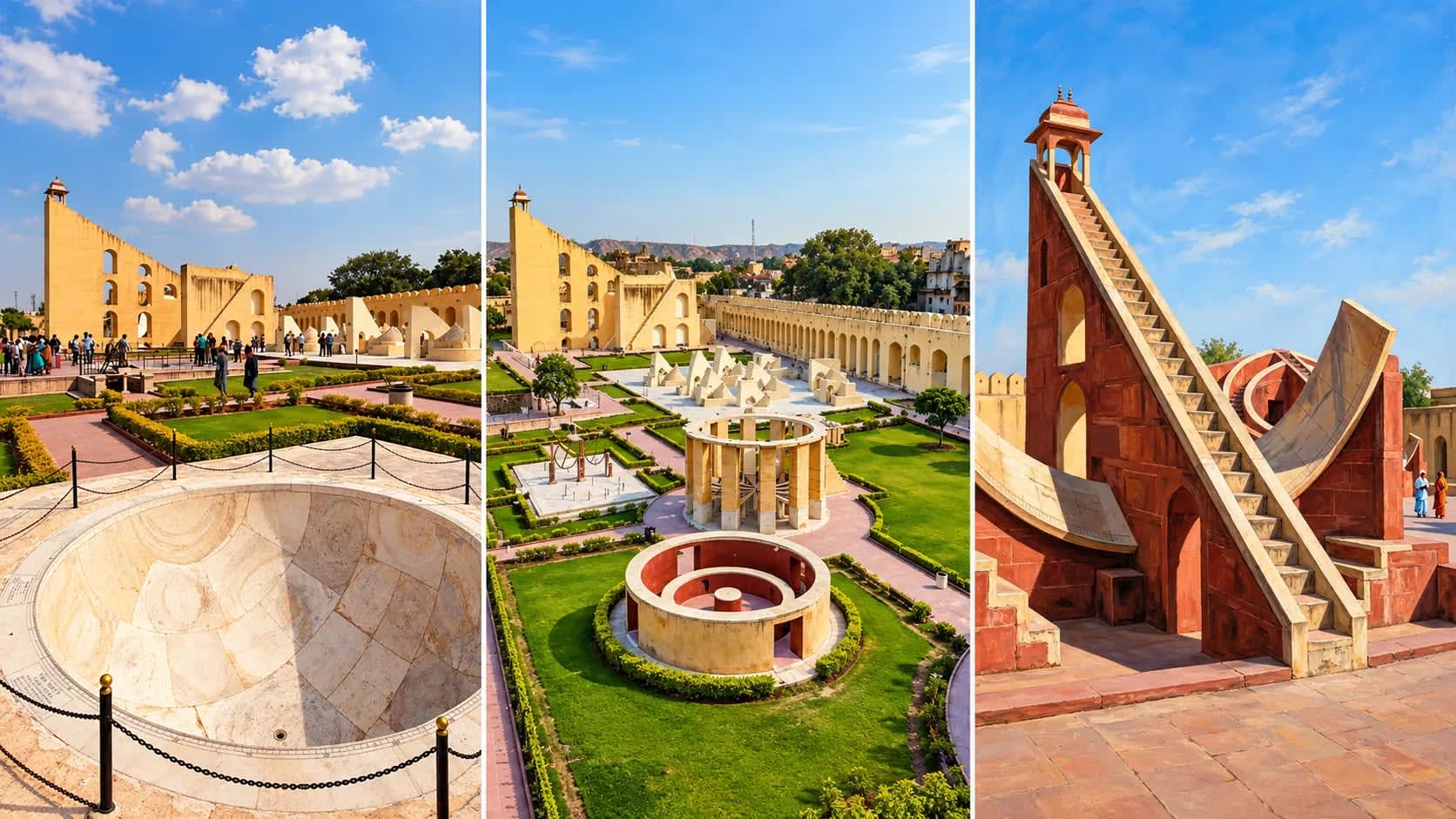
Without explanation the instruments are hard to read, so hiring a guide at the entrance is worth it. Agree the rate first. The shadow demonstrations need sun, so a clear late morning or midday visit works better than a hazy evening. Allow an hour to an hour and a half.
Albert Hall Museum
Albert Hall is an Indo-Saracenic building from 1876 in Ram Niwas Garden, just outside the old city walls. Its collections cover Rajasthani crafts and costumes, coins, and objects from further afield. Accounts differ on how much of the interior is open to visitors at present, so check this before you plan an hour or two around it. Either way the building is worth seeing after dark, when it's lit up.
Nahargarh Fort at Sunset
Nahargarh is the viewpoint, more than the fort. It sits on the Aravalli ridge above the city, and the west-facing walls give the best view as the old city and newer districts light up one by one. The fort's museum areas close earlier in the evening, but the walls and the Padao rooftop restaurant are popular at sunset, which is how most visitors use the place.

Aim to arrive about an hour before sunset, which falls much earlier in winter than in summer. The road up is narrow and winding, so a cab is easier than a self-drive. Reported fort timings vary between sources (some say 10 am to 5:30 pm, others later), and there may be a charge for the vehicle or at Padao, so ask before you go.
Markets and Local Crafts
Johari Bazaar is famous for its jewellery and gemstones, while Bapu Bazaar is known for textiles and footwear. If you are looking for something unique to Rajasthan, block-printed fabric is a highlight and is available in both markets. Bargaining is common, so it is wise to compare prices at a few shops before making any significant purchases. Since weekly closing days vary between markets and individual shops, it is helpful to ask your hotel which ones will be open on the day you plan to visit.

For those interested in seeing the process of block printing, Sanganer, located outside Jaipur, is the traditional center for this craft. More details about visiting Sanganer can be found in our guide to places to visit in Jaipur.
Rajasthani Food
Jaipur is a good city to be hungry in. The classics are:
Dal baati churma: baked wheat balls with lentils and a sweet crumbled churma
Pyaaz kachori: a fried pastry stuffed with spiced onion, a morning and mid-day snack
Mirchi bada: a stuffed green chilli, battered and fried
Laal maas: a hot red meat curry made with Mathania chillies; ask about the spice level
Ghewar: a lattice-textured sweet soaked in syrup
Kulfi faluda: a late-evening cooler, easy to find near the bazaars
Laxmi Misthan Bhandar (for thali and sweets) and Rawat Mishthan Bhandar (for kachori) are the two names that come up most often; confirm hours before you detour for either.
If You Want Something More Adventurous
Hot-air balloon flights, Aravalli treks and similar activities are available around Jaipur, but they depend on weather, season and licensed operators, so book them with someone you can verify. If that side of Rajasthan appeals and you'd rather combine Jaipur with other cities, Paradise Yatra lists a Rajasthan Adventure Trail, a 3N/4D tour that its package page describes as covering a hot-air balloon ride over Jaipur and an Aravalli trek along with Jaisalmer, Jodhpur and Ranthambhore. Check the itinerary tab for what's included before treating it as a Jaipur plan.
Things to Do in Jaipur at Night
Opening hours for monuments mostly end by early evening, so night in Jaipur is about views, food and a few ticketed shows. Hours change by season, so verify anything you plan around.
Amber Fort light and sound show. It runs for roughly 50 minutes to an hour and tells the fort's history through lights and narration. Timings shift with the season, it carries a separate ticket, and reviewers report it can be cancelled or missed if you arrive late. Pick it or Nahargarh for the same evening, not both.
Nahargarh at dusk. The city lights come on below you, and Padao is the usual stop for tea or dinner.
Lit-up landmarks. Hawa Mahal and Albert Hall are illuminated after dark, and Jal Mahal is lit too. The interiors are closed, so you're looking at facades.
Bazaar evenings. Johari and Bapu Bazaar stay lively after sunset on days they're open, and street food is easy to find.
Chokhi Dhani. A village-themed restaurant and cultural venue outside the walled city, usually visited for dinner. Reservations are commonly needed in busy periods.
Jawahar Circle. A large park with an evening musical fountain show, which is an easy option with kids.
A Practical 2-Day Jaipur Itinerary
The plan splits by area: Amer side and a sunset on day one, the old city on day two. All times are estimates, not fixed schedules. Adjust for traffic, the season and how long you stay at each place.
If you're driving from Delhi, remember the five-to-six-hour road journey. This plan assumes you're already in Jaipur at about 7:30 am on day one. Otherwise arrive the evening before or treat your arrival day as a half day.

Day 1: Amer side and sunset at Nahargarh
7:45 to 8:00 am: Reach Amber Fort. The drive from the old city is typically 20 to 30 minutes, longer in traffic.
8:00 to 11:00 am: Amber Fort. If you're a fort person, add Jaigarh in the same morning and let lunch run late.
11:00 to 11:30 am: Panna Meena ka Kund, plus the Anokhi museum only if it's open and you care about block printing.
11:45 am to 12:15 pm: Jal Mahal on the way back.
12:30 to 2:00 pm: Lunch back in the city, ideally a Rajasthani thali.
2:00 to 4:00 pm: Free time. In the hotter months, a rest at your hotel is the sensible move. In cooler months, use it for the Albert Hall interior, if it's open, to lighten day two.
4:15 pm onwards: Drive to Nahargarh to arrive about an hour before sunset. Walk the ramparts, then have tea or dinner at Padao.
If you'd rather do the Amber light show, drop Nahargarh and head to Amber in the early evening.
Day 2: The walled city and the bazaars
9:00 to 10:00 am: Hawa Mahal at opening. Photograph the facade from across the road first, then go in.
10:00 am to 12:30 pm: City Palace, which opens around 9:30 am.
12:30 to 1:30 pm: Jantar Mantar, next door, with a guide.
1:30 to 2:45 pm: Lunch. Pyaaz kachori and a thali, in whichever order you like.
3:00 to 4:30 pm: Albert Hall Museum if open, otherwise a slow walk through Ram Niwas Garden.
4:30 to 7:00 pm: Johari and Bapu Bazaar for shopping, then kulfi faluda.
Evening: Hawa Mahal and Albert Hall lit up, or dinner at Chokhi Dhani if you've booked ahead.
Two days is enough for the main sights but not for lingering. If you're travelling with young children or older relatives, drop Jaigarh and the Albert Hall interior first.
Best Time to Visit Jaipur
October to March is the usual recommendation, and for good reason: days are dry and comfortable enough for fort climbs, and evenings are cool. December and January are busiest, with higher hotel prices, and nights can turn properly cold, so carry a jacket for evenings at Nahargarh and Amber.
From about April, daytime temperatures climb into the high 30s, and by May they commonly reach 40°C or above. If you must go in summer, plan sightseeing for early morning and late afternoon and rest in between. The monsoon months, roughly July to September, bring rain and humidity, with August typically the wettest. They're also quieter and greener, and hotels tend to be cheaper.
Festival dates, including Holi, change each year. Check the calendar if you want to catch one, and note that City Palace reportedly closes on one day of Holi.
Jaipur Trip Cost
There's no single number for a Jaipur trip, because accommodation and transport swing the total. Here's how the budget breaks down, with the one component that's easy to price.
Tickets. At the reported rates for Indian adults, the main state-run monuments add up to about ₹600 per person before City Palace and the Amber light show. The figures below are as reported after the January 2026 revision, so treat them as a guide and confirm at the counter.
Place | Indian adult, as reported | Note |
|---|---|---|
Amber Fort | ₹200 | Up from ₹100; students reported at ₹50 |
Hawa Mahal | ₹100 | |
Jantar Mantar | ₹100 | |
Albert Hall Museum | ₹100 | |
Nahargarh Fort | ₹100 | Vehicle charges and Padao are separate |
City Palace | Varies by ticket tier | Privately run; check its official site |
Amber light show | Check on the day | Separate ticket, seasonal timings |
A composite ticket covering several state-run monuments exists, and its validity was reportedly extended to 10 days from 1 January 2026. Ask at the counter which sites it includes and whether it beats buying singly. Students with valid ID get reduced rates at many sites.
Transport. A private cab with a driver for the day costs more than app cabs and autos but saves time on the Amer and Nahargarh circuit. Ask what the quote includes, including waiting time, parking and tolls.
Accommodation. The widest range. Winter peak weeks cost more than the monsoon or summer, and rooms within walking distance of the old city save cab fare.
Food. Street food and kachori stalls are affordable, while thali restaurants offer a mid-range option. Rooftop dining or meals at heritage hotels are at the higher end of the price range. Having tea or dinner at Padao during sunset is a memorable experience, though not essential.
For exact costs, get current quotes from hotels and cab operators. Prices change by season, and any figure printed here would age quickly.
Getting Around Jaipur
Private cab with driver. Best for the Amer, Jaigarh and Nahargarh circuit, where sights are spread out and the roads are hilly.
App cabs and autos. Fine within the city. Agree the fare or insist on the meter for autos. Plan your return from Amer and Nahargarh in advance, since pick-ups on hill roads are less predictable than in the city.
Walking. The old city is walkable. Hawa Mahal, City Palace and Jantar Mantar are close together, so park the cab and walk between them.
Metro. The Pink Line currently ends at Badi Chaupar, close to Hawa Mahal, and is handy for the old city but doesn't reach Amber or Nahargarh. Check whether the line has been extended before you rely on it.
Guides. Official guides are available at the major monuments. A guide makes the biggest difference at Jantar Mantar, where the instruments mean little without explanation. Confirm the price before you start.
Practical Tips for First-Time Visitors
Wear comfortable shoes with grip. Amber and Nahargarh involve ramps, steps and uneven stone.
Carry water and a hat, even in cooler months. Fort courtyards have little shade.
Carry ID if you're a student or an Indian citizen, because ticket categories and concessions depend on it.
Some sites charge separately for cameras or video, so check at the counter.
Politely decline unofficial guides at tourist spots, especially around Amer.
Book hotels early for December and January.
Check opening days. A few smaller sites, including the Anokhi museum, are reportedly shut on Mondays.
Got Questions? We Have Answers.
Find everything you need to know about our seamless booking process, package details, and unforgettable travel experiences.
24/7 Support
Always here to help